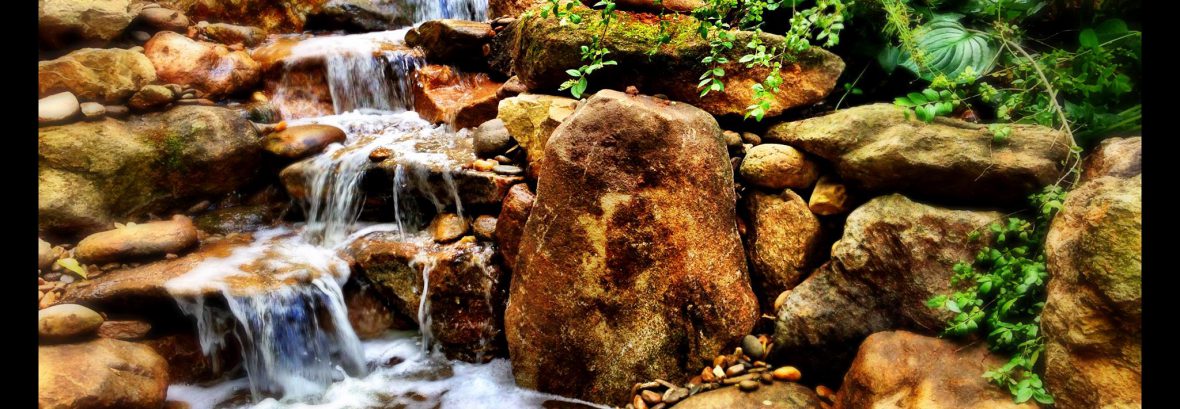
We are starting a new Pondless Waterfall in Asheville, NC this week.
This is a very unique job because the site of the waterfall build is 1000 ft downhill from our clients house in the middle of the woods! All the materials for this project will be brought down a system of switchback trails that our client has built over the last 15 years.
We just finished excavation and moving 20 tons of materials down the hill by hand.
It took a couple days of full time work to get all the rock and gravel down the hill.
We also ran into a large rock shelf during excavation. We have no power on site so we decided to use some old school techniques to get the rock out of our waterfall area. Using chisels and hammers we were able to split the shelf into pieces by hand, instead of going to get the generator and jackhammer. It was actually more time efficient to do it this way due to the site access.
We are now ready to build, A little sweat and blood later! But I think the end result will be worth it.
Here is a quick video showing how we move rock in tight spaces/ existing landscapes when we can’t use a machine or dolly.
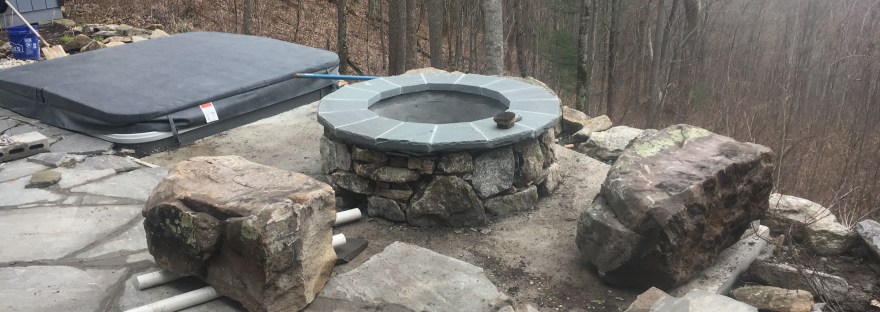
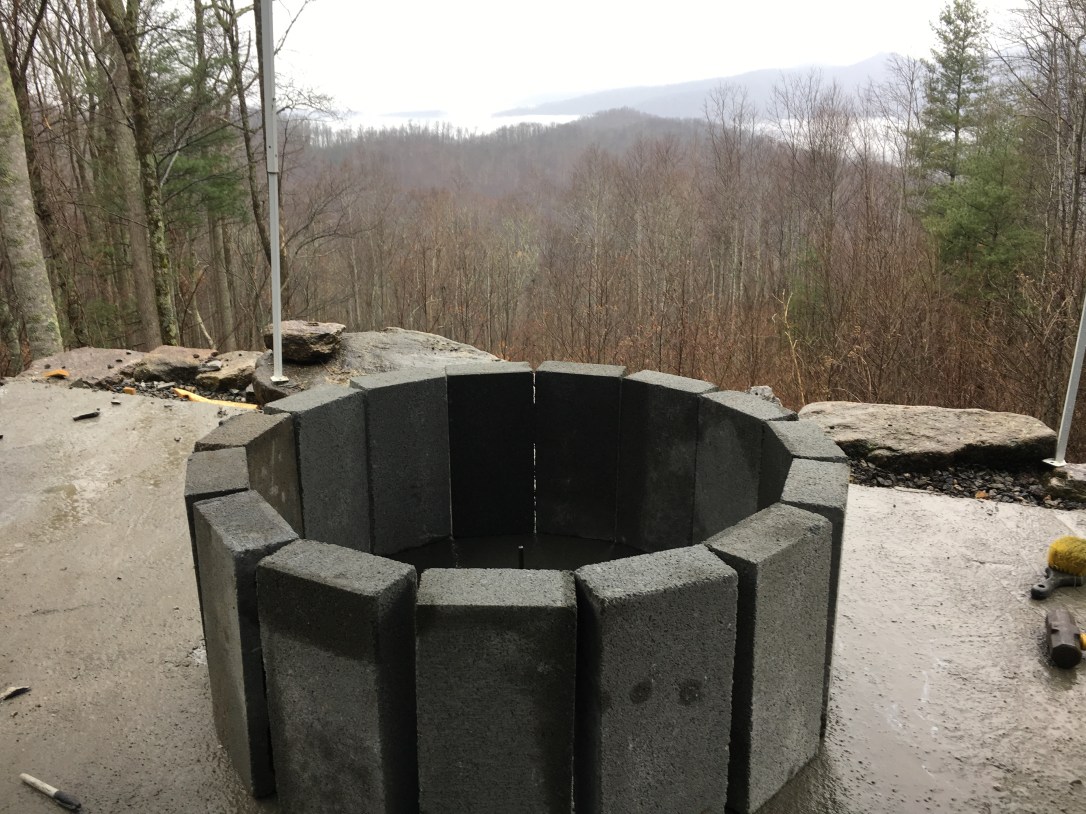
This boulder we are moving here is approx. 1000# and will be used as a seat for the fire pit we just installed for our clients in Weaverville, NC
We use plywood and 2 inch PVC pipe to move the rocks. Once the rock is on the wood and pipes it can be moved and placed with ease.
This is a very old technique for moving rock and can be time consuming, but it is worth the time when you can get large custom boulders to a feature that is hard to access.
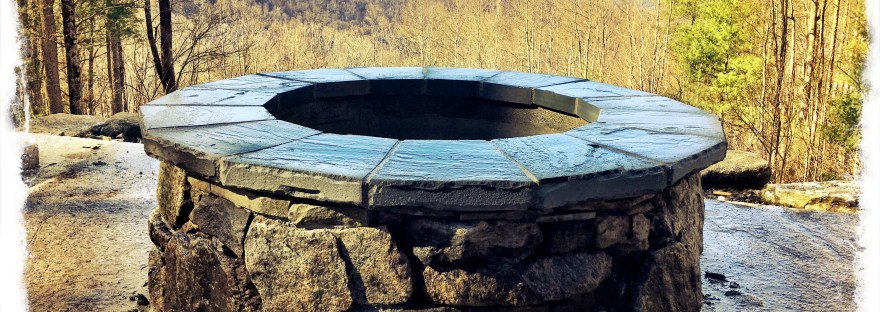
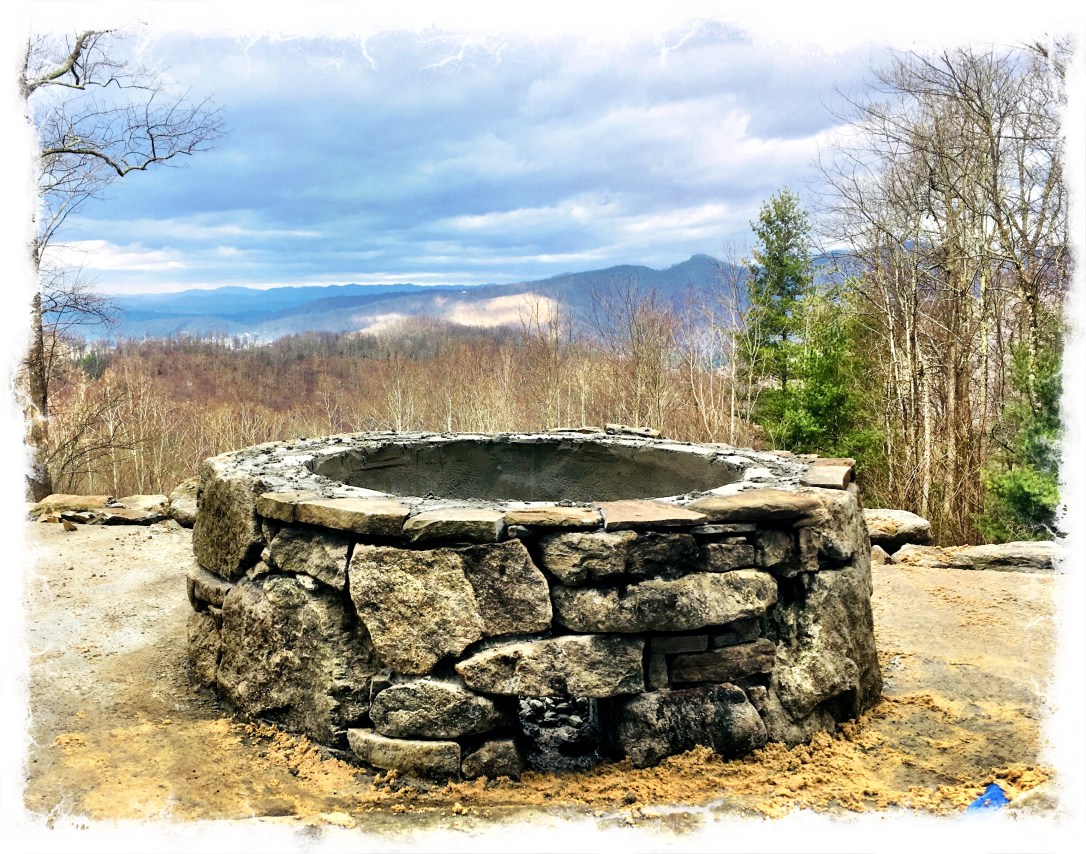
Here is the finished fire pit with the boulder benches roughly placed.
We will set the boulders and finish around them with flagstone to complete the area.
This project also includes, a sunken hot tub and a custom water feature to make an incredible outdoor living space.
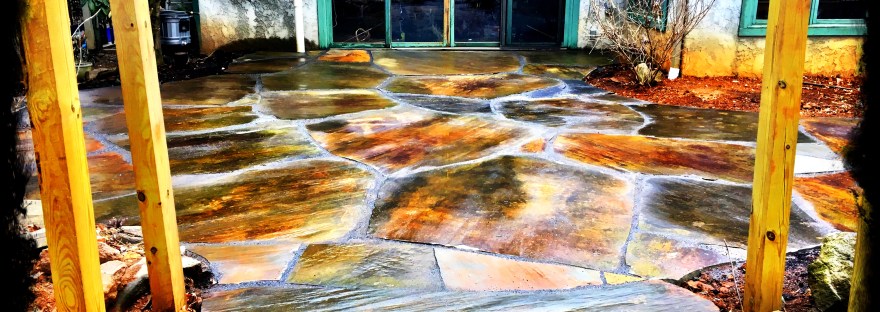
We spent the last couple weeks in Asheville building a Flagstone Patio.
This patio was unique because each needed to be set with a machine due to their size and weight. Some of the slabs were 5 inches thick and 800-1000 pounds.
We prepped the base of the patio with 8 inches of compacted drain rock. We then hand selected and cut each slab to fit tightly with the other slabs. Having a tight and consistent joint is crucial for the long term stability of any dry laid flagstone patio.
We used a durable webbing, instead of a traditional strap, to set the slabs. This allowed us to easily remove the webbing after the stone was set without disturbing the base layer. This can be difficult and time consuming for the builder.
Our clients were very pleased with the finished product and invited us back for more landscaping and stone work projects in the Spring.
Feel free to give us a call for your next patio, retaining wall or water feature project.












 Living Waters Landscaping LLC